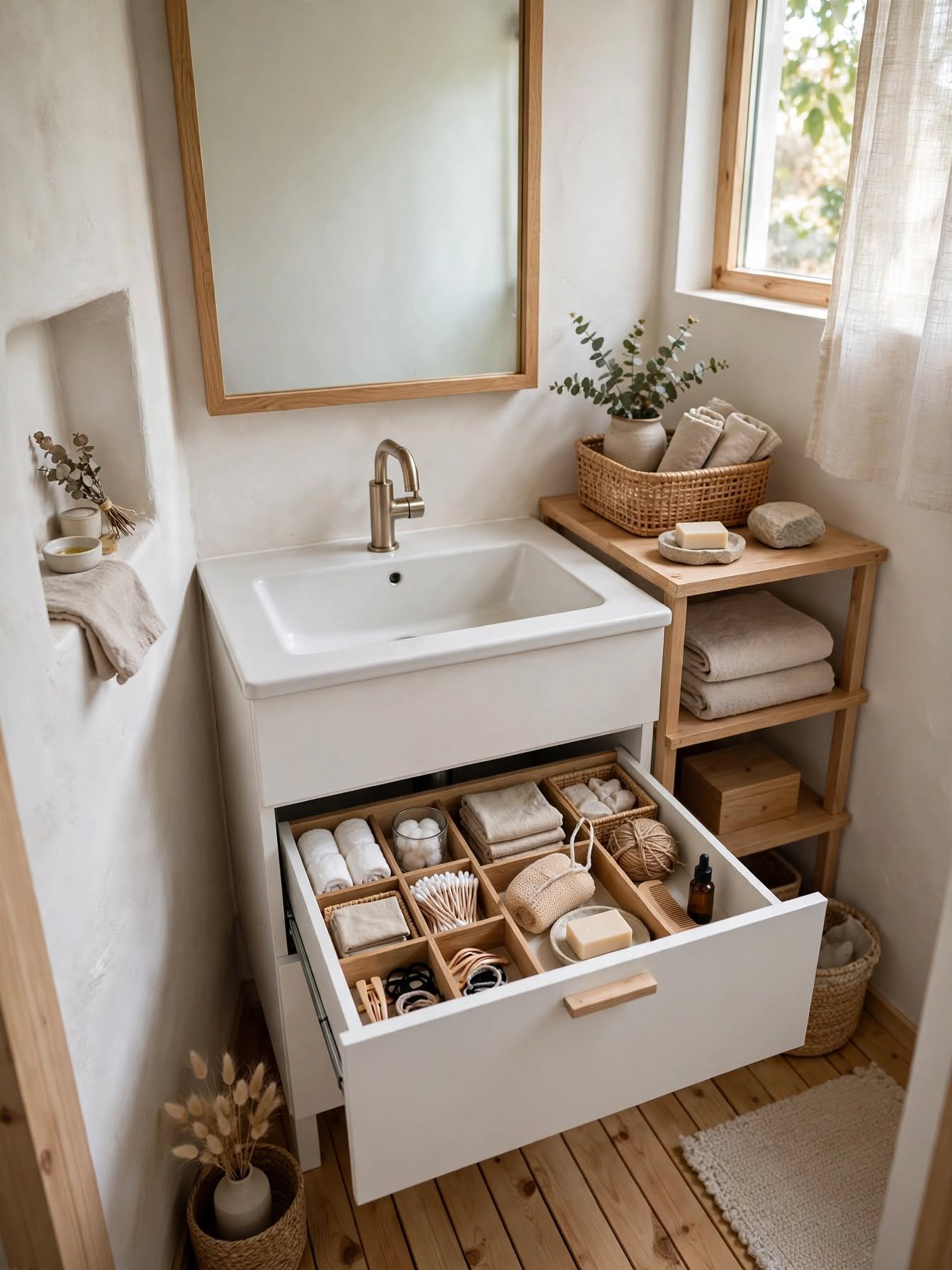
A small bathroom does not necessarily need more storage furniture. In many cases, adding another cabinet, cart, basket, or shelf simply gives more things a place to accumulate.
The most effective bathroom storage for small spaces usually works differently: it makes better use of space that already exists.
That might mean organizing the depth of an under-sink cabinet, using the back of a cabinet door, moving everyday items onto a shallow wall shelf, or choosing concealed storage instead of adding another piece of furniture to the floor.
The goal is not to fit the maximum number of containers into the room.
It is to make the things you actually use easy to reach without making the bathroom feel more crowded.
What Kind of Storage Is Best for a Small Bathroom?
The best storage for a small bathroom usually has a small physical footprint, uses existing or vertical space, and keeps frequently used items easy to access.
In practical terms, that often means prioritizing:
- storage inside existing cabinets
- narrow wall-mounted storage
- shallow shelves
- medicine cabinets
- recessed storage
- cabinet-door organizers
- drawer dividers
- under-sink pull-outs
before adding freestanding furniture.
A useful way to think about bathroom storage is not simply:
“How much can this hold?”
but:
“How much usable storage does this give me for the amount of space it occupies?”
That distinction matters much more in a small room.
The Storage Footprint Rule
Before adding anything to a small bathroom, compare the storage it creates with the space it consumes.
A good storage solution should ideally do at least one of these things:
1. Use space that was previously wasted.
Examples include the back of a cabinet door, the area around plumbing pipes, or empty wall space above the toilet.
2. Replace a less efficient storage method.
A divided drawer may replace several countertop containers.
3. Move clutter away from a visually important surface.
A medicine cabinet can move toiletries off the sink without taking additional floor space.
If a storage product occupies new floor or counter space but does not meaningfully improve access, it may actually make a small bathroom less functional.
Quick Comparison
| Storage Type | Uses New Floor Space? | Visibility | Best For |
|---|---|---|---|
| Under-sink organizer | No | Hidden | Cleaning products, toiletries |
| Cabinet-door organizer | No | Hidden | Small everyday items |
| Medicine cabinet | No | Mostly hidden | Daily toiletries |
| Floating shelf | No | Visible | Towels, attractive containers |
| Recessed niche | No | Low visual clutter | Shower or wall storage |
| Narrow storage cart | Yes | Visible | Bathrooms with an unused gap |
| Large floor cabinet | Yes | Visible | Only when adequate floor space exists |
This is why the largest storage unit is rarely automatically the best option for the smallest bathroom.
Start With the Storage You Already Have
Before buying anything new, look inside your existing bathroom cabinets and drawers.
Many small bathrooms technically have enough storage volume but use it inefficiently.
A deep vanity cabinet is a good example. Items often collect in one layer on the cabinet floor while a large amount of vertical space above them remains unused.
Make Under-Sink Storage Work Around the Plumbing
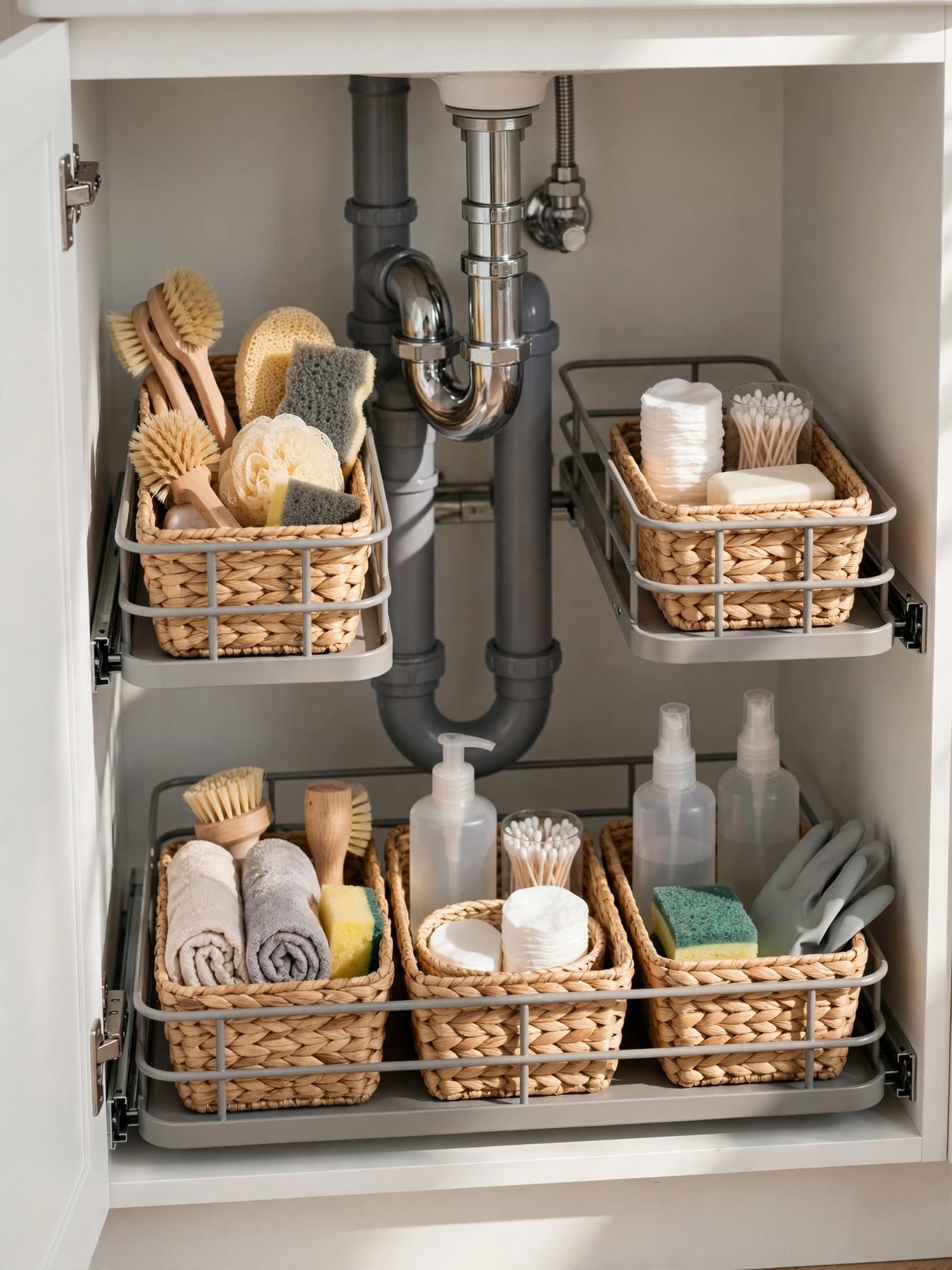
Under-sink cabinets are awkward because pipes interrupt the space, but that does not mean the entire cabinet needs to become one large open compartment.
Two-level organizers, pull-out baskets, or U-shaped organizers can help use both depth and height while leaving room for plumbing.
The important part is accessibility.
If reaching something at the back requires removing five items from the front, the storage system is technically holding things but not functioning particularly well.
Consider grouping items by purpose, for example:
- cleaning supplies
- spare toiletries
- hair products
- toilet paper
- first-aid items
Frequently used products should stay toward the front or in a pull-out section.
Occasional backups can go deeper inside.
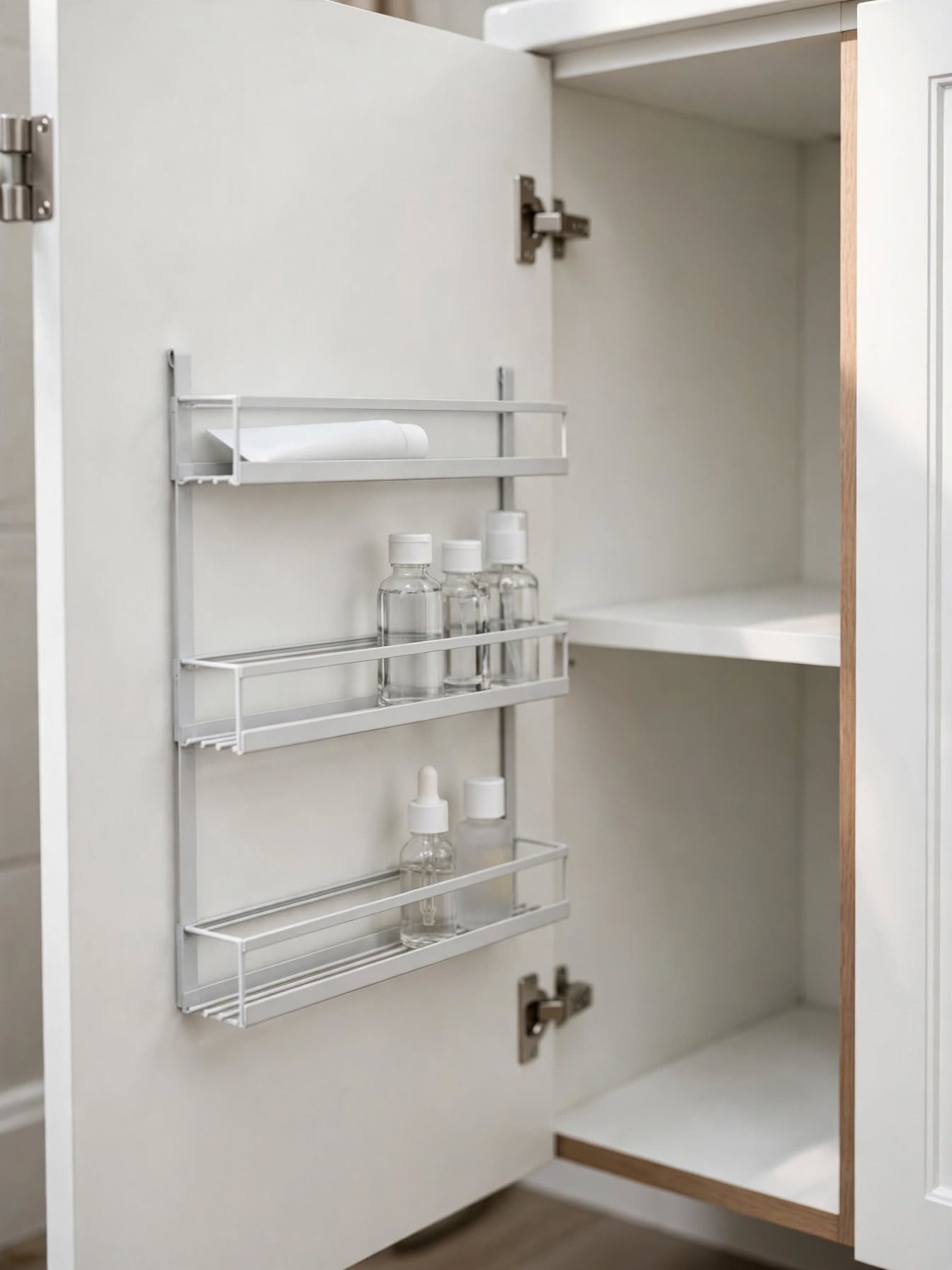
Use the Inside of Cabinet Doors
The back of a cabinet door is one of the easiest places to add storage without making a bathroom look busier.
Slim bins, shallow racks, hooks, or small organizers can hold items such as:
- toothpaste
- brushes
- hair accessories
- cleaning cloths
- small bottles
- first-aid supplies
Keep the organizer shallow enough that the cabinet can still close without hitting shelves, pipes, or products inside.
This type of storage works particularly well because it improves access without creating another visible object in the room.
Should You Put Everything Into Storage Containers?
No. Containers are useful when they create categories or prevent small items from getting lost, but adding containers simply because they fit can create another layer of clutter.
Use a container when it solves a specific problem.
For example:
Good use of a container:
Several small first-aid items repeatedly disappear at the back of a cabinet.
Less useful:
Putting three bottles that already stand neatly together into a decorative basket that occupies more space than the bottles themselves.
For deep cabinets, clear or clearly labeled containers can make contents easier to identify.
For drawers, dividers are often more space-efficient than multiple individual boxes.
Use Vertical Space Without Covering Every Wall
Small bathrooms often have unused vertical space, particularly above the toilet or beside the vanity.
That does not mean every empty wall needs shelving.
One or two carefully positioned storage areas are usually more useful than several small shelves spread around the room.
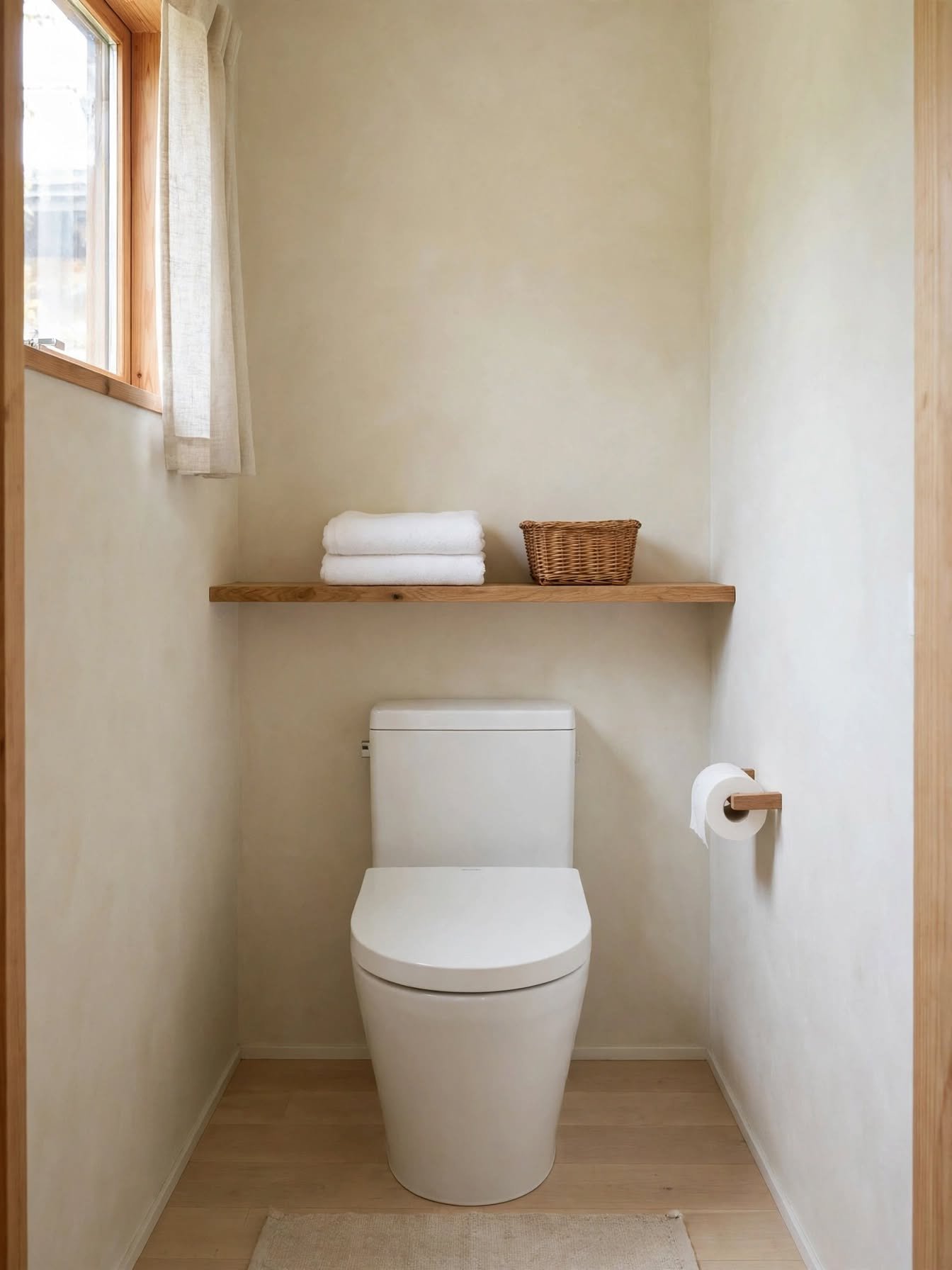
Floating Shelves
A shallow floating shelf can work well for:
- folded hand towels
- spare toilet paper
- a small basket of occasional-use items
- lightweight bathroom essentials
Depth matters.
A very deep shelf may technically provide more storage, but it also projects farther into the room and can make a narrow bathroom feel tighter.
For small spaces, shallow and intentional usually works better than deep and oversized.
What Are Some Clever Storage Ideas for a Small Bathroom?
The cleverest storage ideas usually make use of overlooked space rather than adding another large storage unit.
Some particularly practical options include:
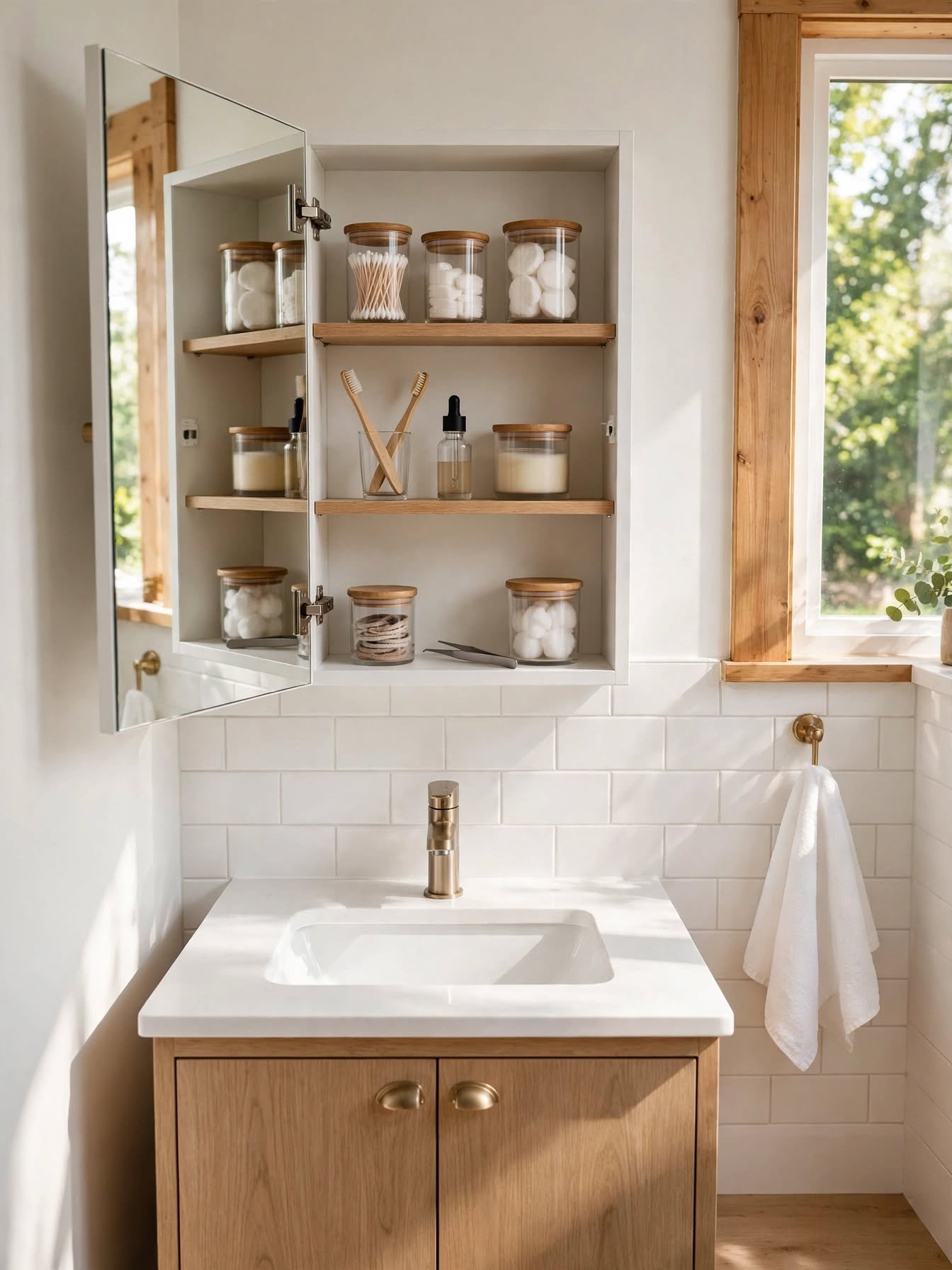
A mirrored medicine cabinet
This combines two functions in one location: a mirror and concealed storage.
It is especially useful for keeping small daily-use toiletries close to the sink without leaving them on the countertop.
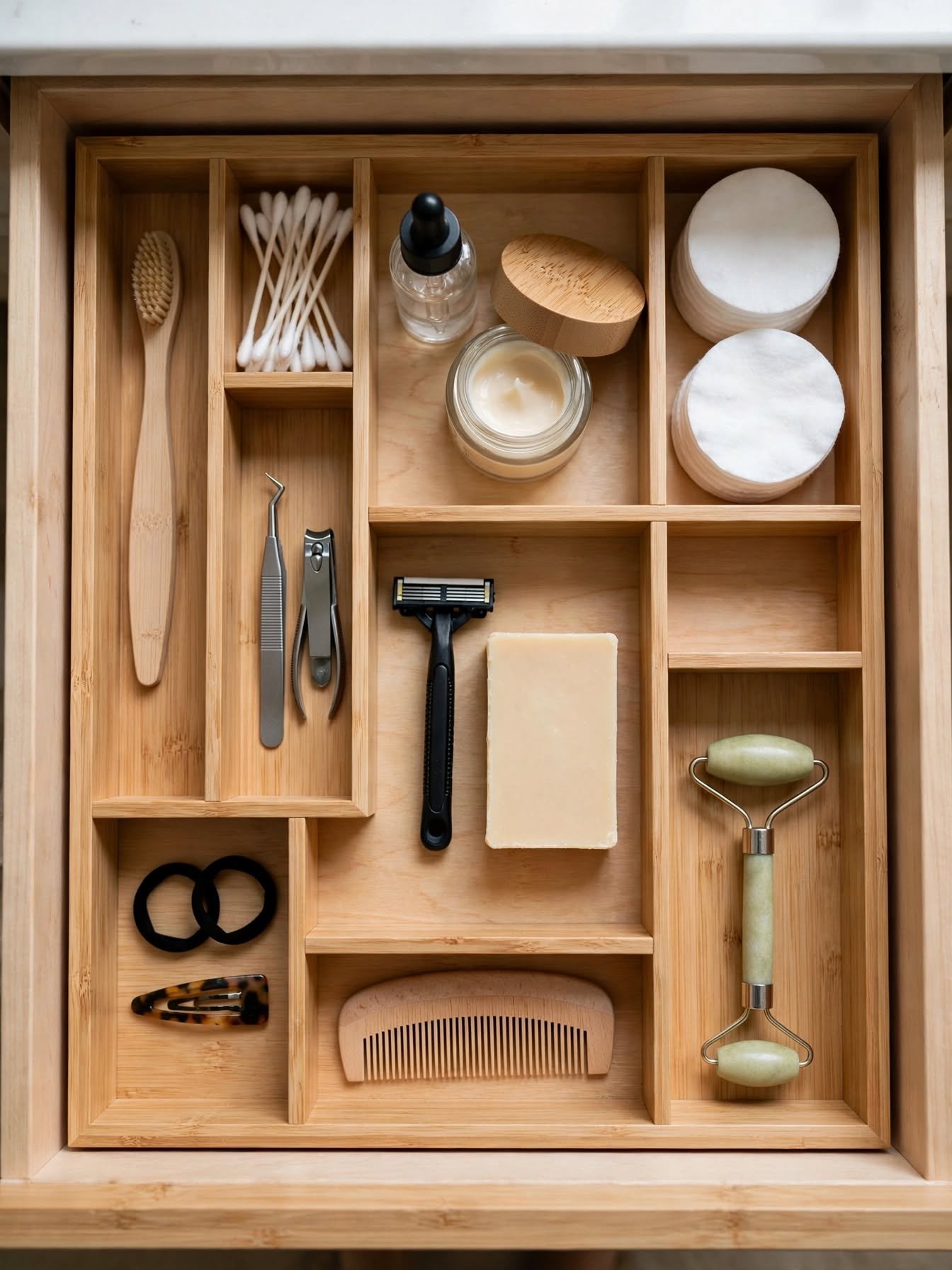
Drawer dividers
Drawers frequently become inefficient because small objects slide into one another.
Simple dividers can create defined zones for grooming products, cosmetics, dental care, or other daily essentials.
Narrow shelving beside an existing fixture
If there is a genuine unused gap beside a vanity or toilet, a slim unit may be useful.
Measure first.
A storage tower that technically fits but restricts movement is not an improvement.
Hooks instead of additional shelving
Towels, robes, hair tools, or lightweight toiletry bags may only need a hook rather than an entire cabinet or shelf.
Over-door storage
When the bathroom door has enough clearance, the back of it may provide useful vertical storage without consuming usable wall or floor area.
How Do You Organize an Extremely Small Bathroom?
In an extremely small bathroom, organize according to frequency of use rather than product type alone.
Start by dividing everything into three groups.
Daily
Items used every day should be accessible with one simple action.
Examples might include:
- toothbrush
- toothpaste
- facial cleanser
- deodorant
- frequently used skincare
These belong in the easiest-to-reach drawer, medicine cabinet, or small designated area.
Regular but not daily
Products used a few times a week can move into secondary storage.
Examples could include hair products, grooming tools, or additional skincare.
Occasional or backup
Bulk packages, duplicate bottles, spare toiletries, and rarely used products should occupy the least convenient storage locations—or be stored somewhere outside the bathroom if necessary.
This prevents valuable bathroom storage from being consumed by items that are rarely touched.
The One-Movement Test
A simple way to evaluate everyday bathroom storage is to ask:
Can I reach this item in one movement?
If you have to move a basket, lift another container, remove three bottles, and then reach behind them, the item is not truly accessible.
Reserve the easiest storage locations for the products you use most.
Less frequently used products can tolerate an extra step.
This small distinction often improves a bathroom more than adding additional storage.
What Are Good Built-In Storage Ideas for a Small Bathroom?
Built-in storage can be particularly effective in small bathrooms because it increases usable storage without necessarily increasing the room’s footprint.
However, it makes the most sense during a renovation or when walls or cabinetry are already being modified.
Recessed Medicine Cabinets
Instead of mounting a deep cabinet onto the wall surface, a recessed medicine cabinet sits partly inside the wall.
This can reduce how far the cabinet projects into the room while still providing storage around the vanity.
Wall construction, electrical wiring, and plumbing need to be considered before installation.
Shower Niches
A recessed shower niche can replace hanging shower organizers or bottles stored on the shower floor.
Its biggest advantage is not simply appearance.
It puts shower products in a defined location without introducing another object into a limited shower area.
Built-In Vanity Drawers
If choosing a new vanity, drawers can sometimes make better use of storage than one large open cabinet.
Items can be separated by category and reached from above rather than disappearing behind one another.
Plumbing layout still needs to be taken into account.
Be Careful With Over-the-Toilet Storage
The area above the toilet is valuable vertical space, but it is also easy to overload.
A large storage unit filled with baskets, bottles, decorations, and spare supplies can visually dominate a small room.
Instead, consider one clear purpose for the area.
For example:
- one shallow cabinet for concealed supplies
- one or two shelves for towels and necessities
- a compact unit for toilet paper and backups
Avoid turning every available inch into storage simply because the space exists.
Empty space also has value in a small bathroom.
Open Storage or Closed Storage: Which Works Better?
Neither is always better. The most practical small bathrooms often use both.
Closed storage works best for:
- mixed packaging
- cleaning products
- backups
- personal-care items
- visually inconsistent objects
Open storage works best for:
- hand towels
- a few frequently used products
- items stored in consistent containers
- things you need to see immediately
If a room already feels visually busy, adding more open shelving may make the problem worse even if the shelves are neatly organized.
In that situation, concealed storage usually gives the room more visual breathing room.
When Does a Storage Cart Make Sense?
A narrow rolling cart can work if your bathroom has an otherwise unusable gap and you need flexible storage.
It is less useful when it occupies part of an already narrow walking path.
Before buying one, mark its dimensions on the floor with painter’s tape.
Then check whether you can still comfortably:
- open doors
- use the toilet
- stand at the vanity
- enter and leave the shower
- clean around it
If the cart interferes with any of those activities, the extra storage probably is not worth the lost floor space.
What Should Stay on the Bathroom Counter?
Ideally, only the items you use frequently enough that putting them away would be inconvenient.
For many people, that may be only a few products.
A small tray can help define the area, but the tray should organize existing essentials rather than become permission to add more things.
A useful rule is:
If an item is not used most days, ask whether it needs to live on the counter.
Moving occasional-use products into a drawer or cabinet can make even a small vanity feel substantially more usable.
Common Small Bathroom Storage Mistakes
Adding storage does not automatically improve organization.
Several common approaches can actually make a small bathroom harder to use.
Buying storage before deciding what needs to be stored
Measure both the available space and the items first.
Otherwise, it is easy to end up organizing containers instead of organizing belongings.
Using too many small baskets
Baskets can be useful, but several overlapping containers can waste cabinet space.
Filling every wall
Vertical storage works because it preserves floor space—not because every vertical surface needs to be occupied.
Storing backups in prime locations
Daily-use space should be reserved for daily-use products whenever possible.
Choosing storage by capacity alone
A huge cabinet may hold more, but that does not make it appropriate for a small room.
Consider movement, access, and visual weight as well.
Before You Buy More Bathroom Storage
Try this quick check first.
Keep:
Things regularly used in the bathroom.
Relocate:
Bulk supplies or occasional products that could reasonably live in a nearby closet.
Remove:
Expired, empty, duplicate, or unused items.
Reorganize:
Existing drawers, cabinets, cabinet doors, and vertical spaces.
Add storage only after that.
You may discover that the bathroom does not need significantly more storage at all—it simply needs the existing storage to work better.
A Simple Decision Guide
If your main problem is countertop clutter, start with a medicine cabinet, drawer organization, or better vanity storage.
If products disappear inside deep cabinets, consider pull-outs, tiered organizers, or clearly defined containers.
If you have almost no cabinetry, look at shallow wall-mounted storage before floor-standing furniture.
If the room feels visually crowded, prioritize concealed storage.
If you are renovating, investigate recessed niches and built-in cabinetry before adding freestanding storage later.
And if storage keeps filling up regardless of what you install, the real problem may be the quantity of items being stored rather than the amount of storage available.
Small Bathroom Storage Should Make the Room Easier to Use
The most successful small-space bathroom storage is often surprisingly unobtrusive.
It uses an existing cabinet more efficiently, turns an overlooked surface into useful storage, or moves everyday products somewhere easier to reach.
That is a better goal than trying to fill every empty corner.
When evaluating a new shelf, cabinet, basket, or organizer, ask three questions:
Does it use space that is currently wasted?
Will it make something easier to reach?
Will the bathroom still feel comfortable once it is there?
If the answer to all three is yes, the storage is probably helping.
If it only gives you another place to put things, it may simply be adding a different kind of clutter.